Friend’s Letter
November, 2026


Dear Friends,

As the midterm elections in the United States take place this week (November 3) we find ourselves confronted with various voices asking us to vote for a way to guide our country through a deeply divided social, religious and political context. One of the core values of our democracy has always been the rule of the people through their vote. I hope that all of you, if you are U.S. citizens, will vote.

My closest friends know that I have been closely following politics for most of my life. As a teen, if someone asked me what I wanted to do with my life, I sometimes answered, “Become the governor of Tennessee.” (I got involved in local and state politics when I was fifteen years old.) This youthful interest has never fully died out over the years. Of course I became a pastor and then the leader of a mission devoted to Christian unity for twenty-eight years. Still I kept a keen interest in politics. But there is one thing that I have never let happen – I will not reject my friends, who represent many different political perspectives. I am committed to never letting partisan politics destroy my friendships.

My college major was history and political science. As a result I have read and enjoyed U.S. history over my lifetime. This background helped me to see how we have departed from our democratic norms and traditions in recent years. This departure has recently alarmed me so profoundly that I have come to believe democracy is on the ballot. The liberal tradition that sustained our political democracy has come under serious attack since 2016. This attack has been fueled by conservative Christians, both Catholic and Protestant.

In a post-war speech to the British parliament in 1947 Winston Churchill memorably said:

“Many forms of Government have been tried, and will be tried in this world of sin and woe. No one pretends that democracy is perfect or all-wise. Indeed it has been said that democracy is the worst form of Government except for all the other forms that have been tried from time to time.”
So why do so many people, young and old alike, now want to see democracy fail? The reasons vary but they are usually rooted in both religion and politics. The influencers behind this hunger for radical change would like to see our system fail so they can build what they believe will be a better government. Perhaps the best expression of this desire, now hidden in plain sight, was given by Lauren Wilke, the GOP’s 2020 nominee for the U.S. Senate seat in Delaware. The interview with her became immensely popular on YouTube. Wilke said, “I identify more with [Vladimir] Putin’s Christian values than Joe Biden.” She adds, “Putin takes care of his people.” My friends, this is not fringe thinking any longer. It has entered into the mainstream of American politics.

Author Bradley B. Onishi, in his eye-opening 2026 book American Caesar, shows how statements like Wilke’s drive a movement openly intent on replacing democracy with Christian autocracy. This desire, simply put, is to find a dictator who will tear down our system, as we know it, and replace it with a government not by the people but by the strong leader rooted in theocracy. (Indeed, this term is not used by many but the fact remains that this is the goal.)

Bradley Onishi asks, “What is the appeal of the post-liberal story?” He gives three aspects of this worldview that beguile everyday people. (This movement will not die with our midterm elections.)  The three aspects Onishi gives are: (1) Post-liberalism offers a cosmic story in which you can play a meaningful part. (2) Post-Liberalism charms everyday people. Whether it is theologians, pastors or priests, technocrats or successful oligarchs, this practical, simple advice on how to change our way of governance for the better is central. You are being invited into a story where you can play a significant part. (3), Finally, the post-liberalism that millions of our fellow citizens now believe in is this: democracy is an empty signifier. Post-liberalism is ultimately persuasive because it offers meaning at scale: it is an epic, a war between good and evil, where you can have a real role to play in making history.

This current election will not change the script for most of those who have promoted this movement. (Those who embrace this thinking will not be shaken by our votes.)

So why does it matter that we know what’s going on? Only by understanding what is at stake will we engage in stopping this radical turn. I submit that Onishi’s book is a carefully written eye-opener showing how Christian nationalism undermines not only our democracy but challenges our deeply Christian understanding of our fellow human beings, i.e. our neighbors. If we are to take the initiative to be the first to  love then we cannot write off our neighbors, regardless of their race or religion.

One of the very best treatments of how Christians can and should think about these issues can be seen in Pope Leo’s first encyclical, Magnifica Humanitas: On Safeguarding the Human Person in the Time of Artificial Intelligence (2026). I will say more about this encyclical letter in the months ahead.

I’m praying for us to rise to these challenges in our time and become those who love first, last and always.

Prayer Requests and News Updates

  1. I give thanks for my friends. Friendship is a lifelong commitment for me. I am blessed with so many friends who love me and pray for me.
  2. I rejoice that Pope Leo XIV is doing well after his lung surgery. I believe we need him to speak into the very confusion of our time. BTW, Pope Leo is the first pope to ever vote in a U.S. election. That is pretty amazing to me.
  3. I rejoice that my older brother Tom underwent serious cancer surgery and chemo this year. He is doing very well. God be praised for his healing.

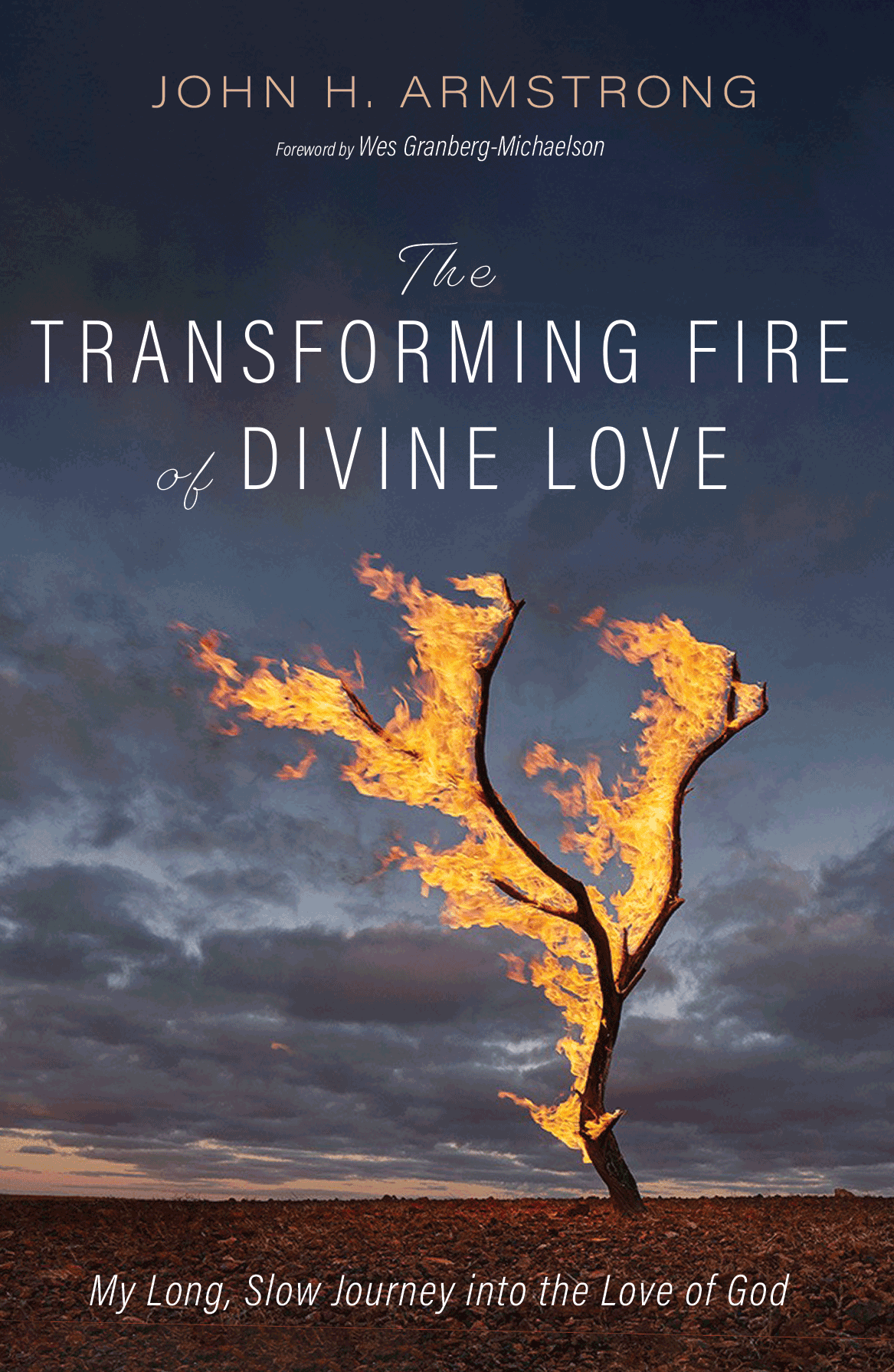
Special 50% off sale, only in November, on The Transforming Fire of Divine Love

www.wipfandstock.com/9798385227419/The-Transforming-Fire-of-Divine-Love

Order copies as gifts for your friends.
Some of the Books I Read in October

  1. Conspirata (2010), Robert Harris. This is the second volume in his excellent trilogy on the life and political leadership of Cicero, the greatest Roman orator before the birth of Christ. Cicero was a leading senator and sought to preserve the Roman republic by keeping Julius Caesar from becoming Rome’s first dictator.
  2. Dictator (2016), Robert Harris. The final volume in this excellent and very readable series. This is surely historical fiction at its very best.
  3. Kahlil Gibran: A Self Portrait (1959), Anthony R. Ferris, translator and editor. Gibran has always fascinated me though I confess I do not much understand him.
  4. Prayers of a Young Poet (2023), Rainer Maria Rilke. Mark Burrows, editor and translator.
  5. Meister Eckhart: From Whom God Hid Nothing (1996), Meister Eckhart. The moving account of Eckhart’s spiritual understanding and mystical experience.
  6. Weapons of Worship: How the Songs of Evangelicalism Form the Soundtrack of Extremism (2026), Rick Pidcock. Pidcock was an insider to the world of contemporary praise and worship music. He tells the fascinating and incriminating story of how this music is being used to drive political extremism. An emphasis on Jesus as “Lord over all spheres” has led a great deal of evangelical music to become the underlying emotional expression of extreme politics. Be careful what you sing and ask yourself repeatedly, “What does this mean?”
  7. American Caesar: How Technocrats and Tech Lords are Turning America Into a Monarchy, Bradley B. Onishi (2026). An alarming and compelling warning about the future of our nation. This is the best such book I have read.