Friend’s Letter
April, 2026
Dear Friends,
What you and I believe about God has immense impact upon how we live and die. But is there a revealed formula (theology) for how we should understand God? What attributes should we ascribe to God? Is there a theology of God found in ideas like omniscience, omnipresence, or perhaps omnipotence? These words, which appear in the front of almost every theology of God I encountered for decades, are clearly not found in the Bible itself. Yet these word massively color our thoughts about God.
In my tradition we said we believed only what was revealed in the Bible. In fact, we used words like “Bible believing Christian” to define ourselves over against other Christians. But is this enough? The Bible clearly has much to say about who God is: God is holy (Isaiah 6:3); God is light (1 John 1:5); and, God is love (1 John 4:8). Hundreds of biblical texts could be added to these few. I remember hearing people say things like: “If the Bible says it, I believe it and that settles it.” Well, it doesn’t take a degree in theology and Bible to readily see that many texts in the Bible are used for purposes that do great damage to the Christian message. What causes this problem?
I submit it is not the Bible itself that is the problem. I find the Scripture to be a fascinating and engaging witness the more I try to make sense of its problematic words and ideas. (Here, serious scholarship has opened up the truth of Scripture in ways that keep impacting my life. Scholarly criticism of the text is truly helpful for our reading the Bible in a healthier way.) But Scripture itself is not the revealed truth of God. Only Jesus is the revealed Truth of God as John 1 makes abundantly clear.
A major problem we must face when trying to better understand the Bible is the impact of Hellenism on interpretation. By Hellenism I mean the influence of Greek culture, philosophy, ethics, language and religion. Hellenism has always had a unique influence in how the Bible has been interpreted. (The New Testament was written in Greek and the Old Testament was translated from Hebrew into Greek before the time of Christ.) Before Christ, Socrates and Plato gave the world a framework for understanding that later shaped Christian theology. By this means Hellenism has continued to exercise profound influence. Augustine was shaped by it in profound ways.
Briefly, here’s what I have in mind about how Hellenism influences our thinking: You may never have heard words like impassibility, transcendence, determinism or timelessness. But these ideas have shaped all of us in how we understand God. Is God unchanging? It all depends on how you use the word unchanging. I am now persuaded that the best synthesis of various passages about God in the Bible tell us that God is unchanging in who he is but not necessarily unchanging in what he does.
Let me give an example from my recent experiences of study and writing. As I wrote The Transforming Fire of Divine Love I had to face this issue of whether or not God actually changed, which brought me face-to-face with the idea of impassibility. I poured over a mountain of reading and discovered just how much this Hellenistic concept lacked in solid biblical support. But once impassibility is taken as a core grounding truth, the idea that God has emotions and feelings has to be denied because God cannot ever change. In stark contrast, I saw in Scripture a theology of divine love. And I was compelled to follow this more Scripture-rooted theology in how I interpreted texts.
My understanding of God continues to change as I try to humbly embrace a theology of a God as divine love. This God who is love seeks relationship with all persons. He really does “have the whole world in his hands” – and these hands are guided by infinite, relational love.
I can now see how the influence of Hellenism has had an immense impact on how I read the Bible from childhood. The more I am aware of this influence, can acknowledge its limitations, and then turn back to my reading and study of the biblical writers, the more clearly I see and know who God is.
By His grace,
Prayer Requests and News
- We continue to need your prayer support for our daughter and twin grandsons, Kobe and Kaleb. Our home is busy and (thus) sometimes stressful. I never imagined being so profoundly involved (at age 77 no less) with young grandsons. Third grade has been a bit more challenging emotionally for one boy but both are excellent students. Stacy continues to thrive teaching K-1st grade special ed.
- As spring brings growth and recovery so my tasks in the yard, and around the house, increase. This calls for renewed effort in caring for so many things. Pray please. I enjoy such work but my recovery time is not as good as it was some years ago.
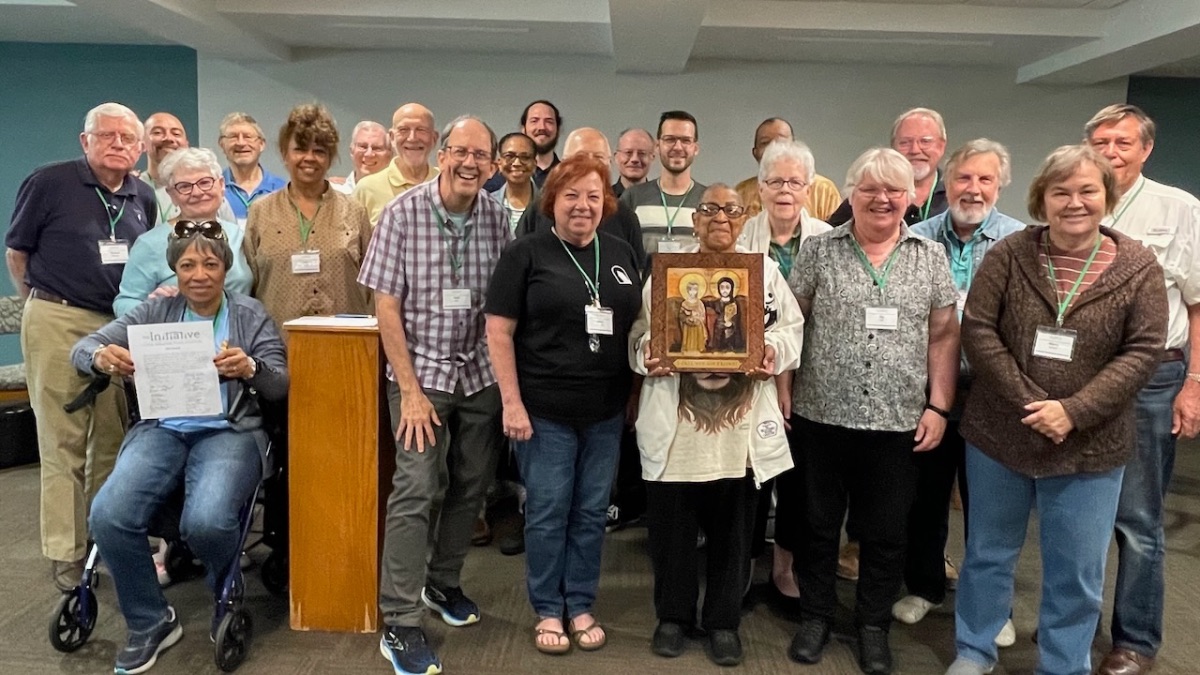
- Pray for the leadership council of The Initiative. Sign up for here for the monthly update from The Initiative. And please consider joining me and many others from around the country at The Initiative’s annual national gathering of in the Chicago area (Darien, IL) this coming June 15-18. Clicking on the image below will take you to the information and registration page
Books I’ve Been Reading
- 1929: Inside the Greatest Crash in Wall Street History and How It Shattered a Nation (2025), Andrew Ross Sorkin. So many myths surround this epic story in U.S. and global history. Sorkin, the writer for the acclaimed TV series, The West Wing, gives the reader a way of seeing and understanding this story more accurately. He is a magnificent writer and his storytelling skills serve him well in this fine book.
- Injustice: How Politics and Fear Vanquished America’s Justice Department (2025), Carol Leonnig and Aaron C. Davis. There were so many things behind this story that I lost track of what was happening when it happened. The story of how politics and fear altered our justice department are shocking. I never dreamed I would live the DOJ broken in this way. I am not sure a few elections will restore the department with all the damage done.
- God Unbound (2016), Chad Bahl. The author, a former leader in Campus Crusade for Christ, explores the shortcomings of popular evangelical theology. While this book is easy to read, (I drew some my ideas about Hellenism from his chapter on the subject), it is choppy. It really needed a copy editor in the worst way. I suppose this is what you would expect me to say as an author/editor.
- A Systematic Theology of Love, Volume One, “God and Creation” (2026), Thomas Jay Oord. I first discovered Oord through reading books about the openness of God; i.e. God is not fixed by time but is continually open to things that happen which God does not control. My initial reaction to this theology was quite negative since it challenged everything I had been taught about God. Oord has now begun to write a compressive theology built on divine openness and eternal love. He calls this “a theology of love.” This book is dense but quite readable. He explains everything clearly but you may need to read some passages several times. So far as I can tell Oord is right when he claims that there has never been a written systematic theology of love.